A homage to collective memory
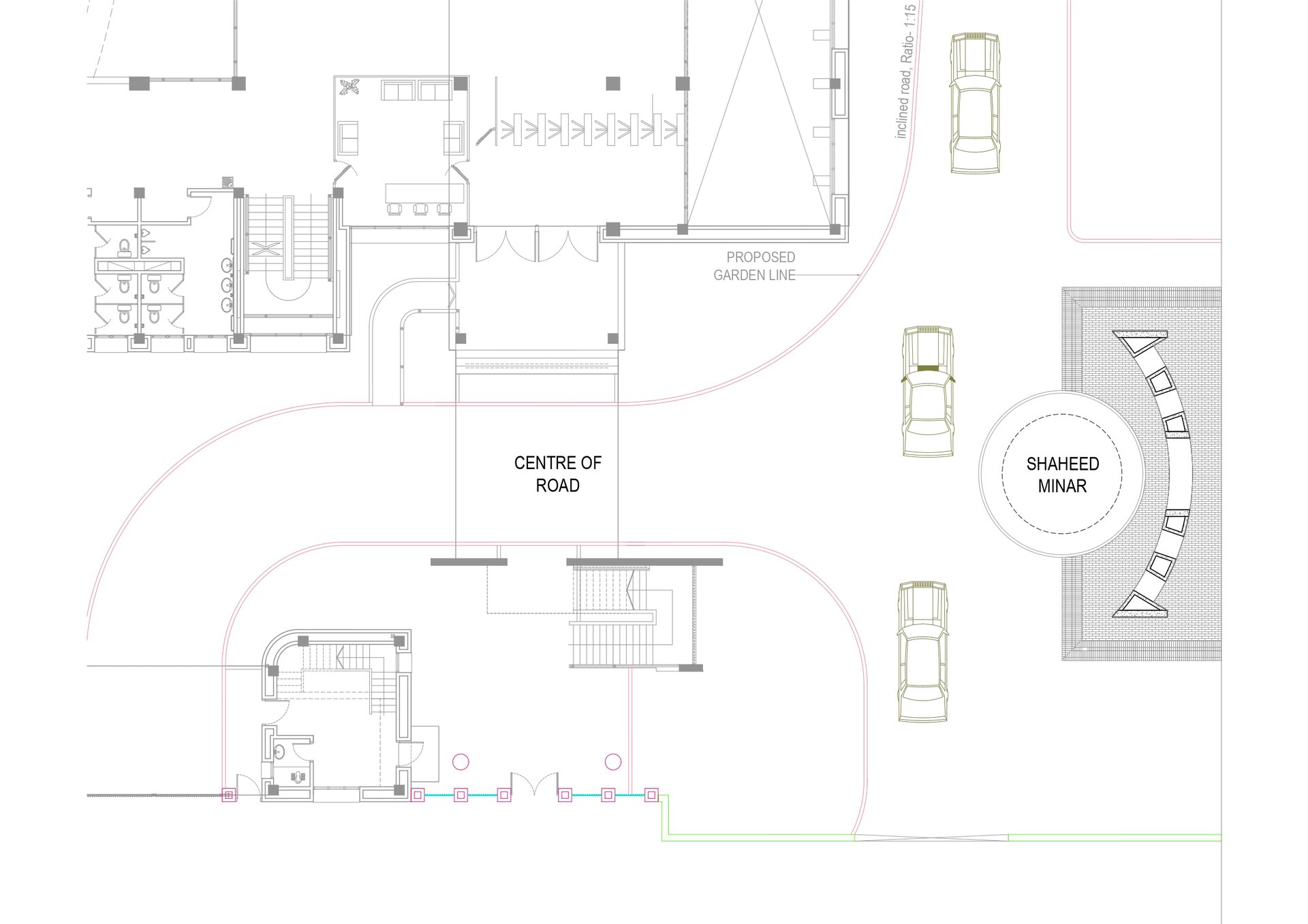
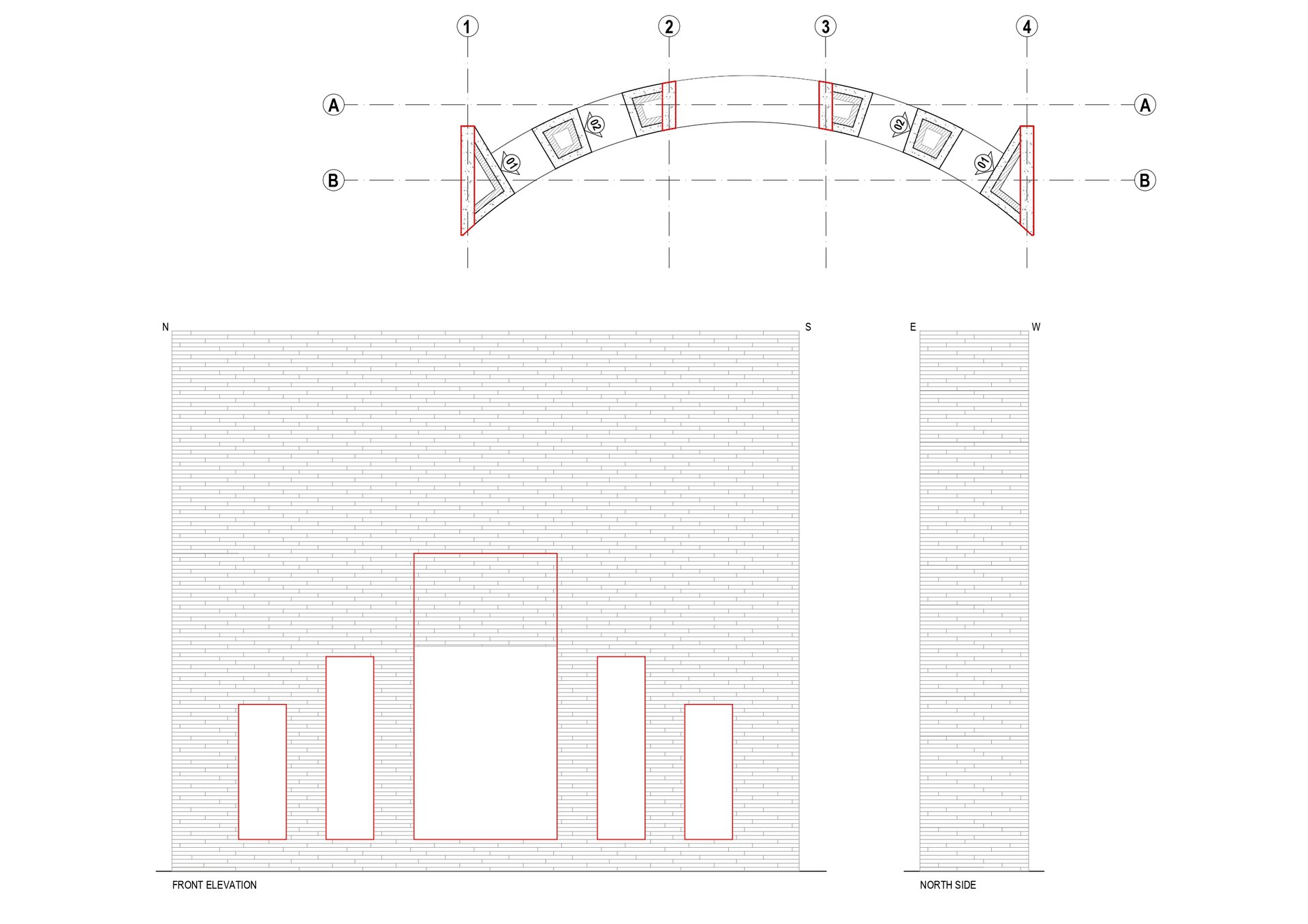
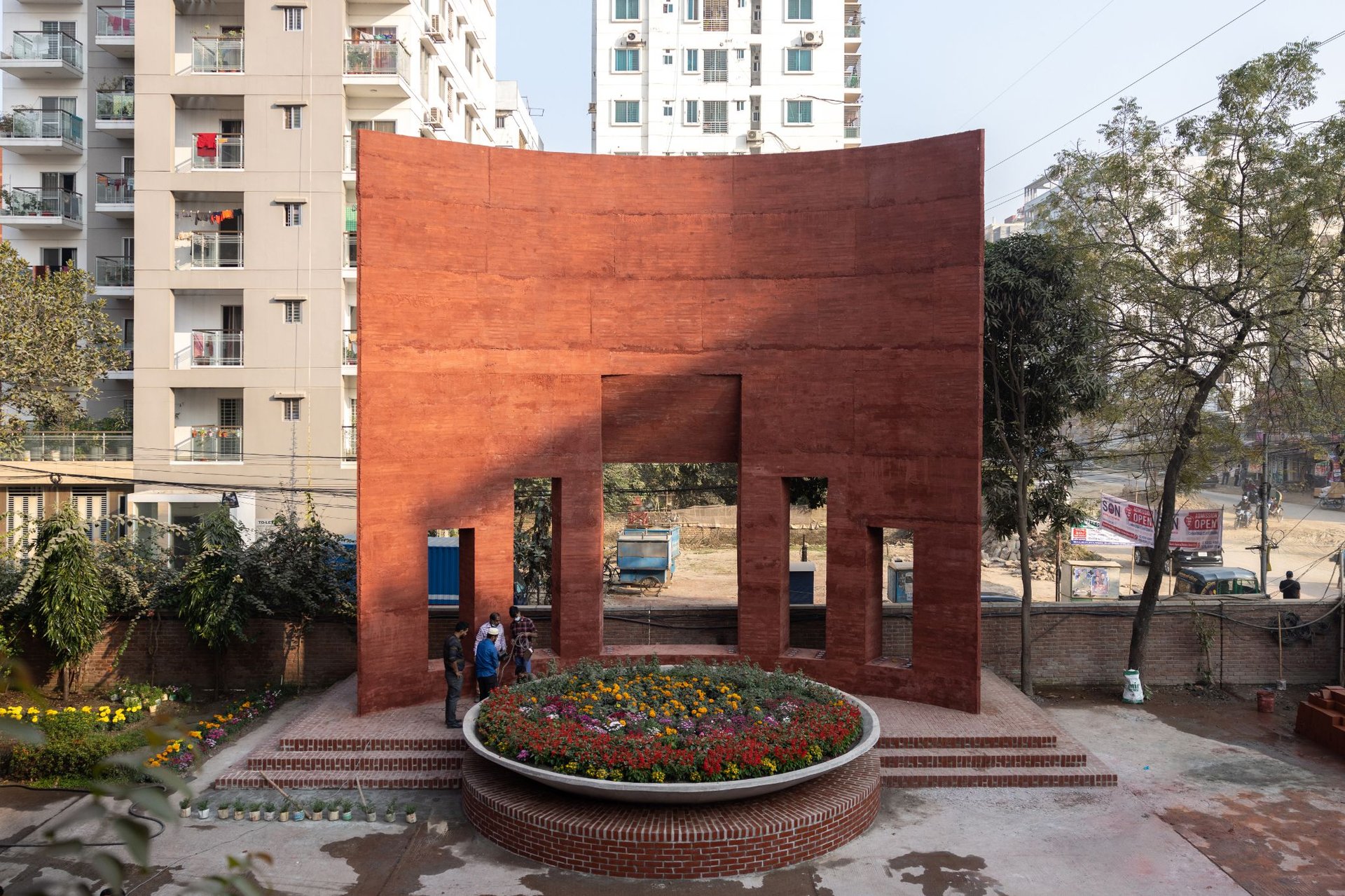
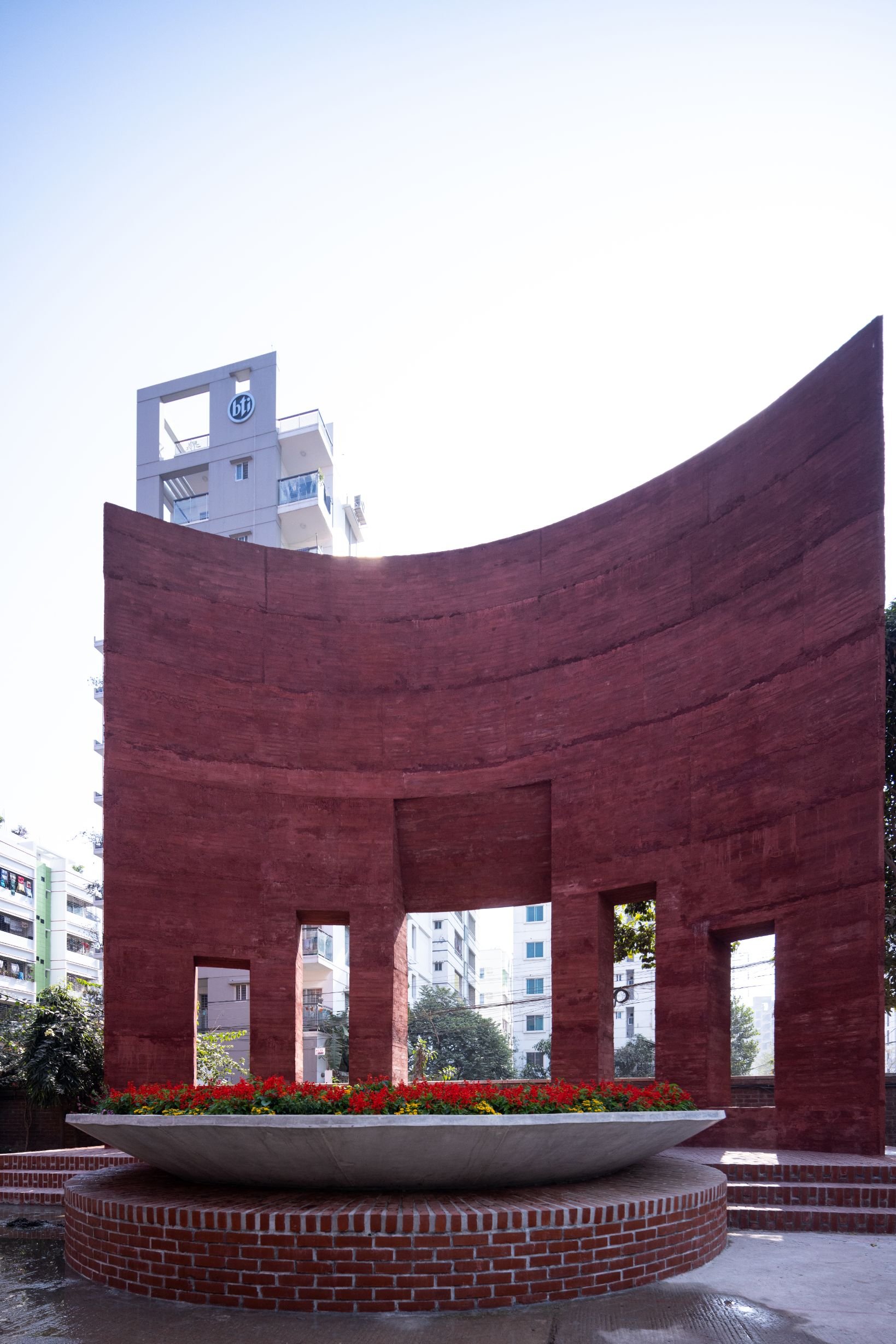
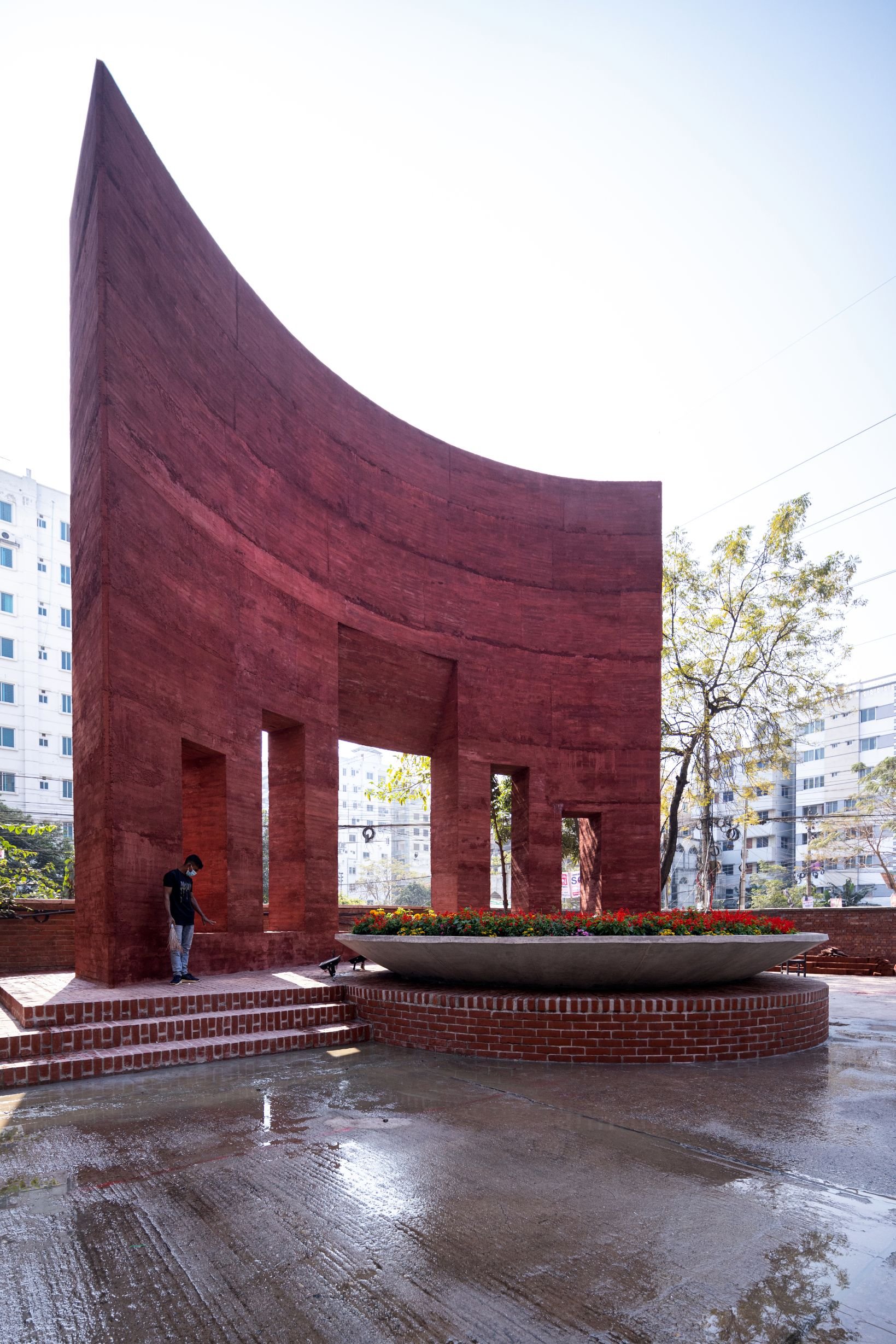
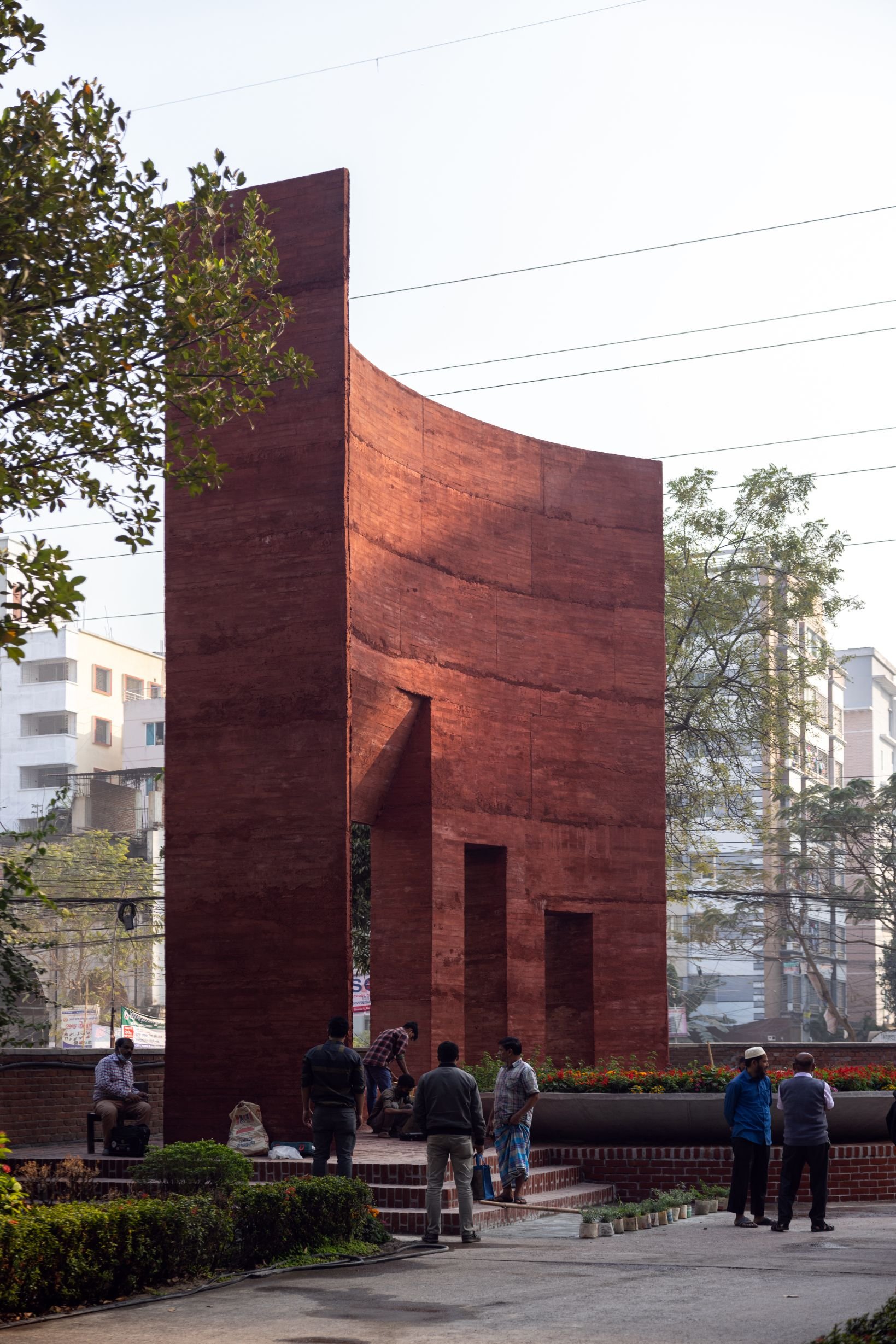
The design of the Shaheed Minar starts from a simple understanding of the monument as a place of remembrance. Conceived as a monument of collective memory, the architecture becomes a tangible reflection for history, remembrance, and tribute to the language movement of 1952. A curved concrete wall is used as the primary architectural element, gradually folding to define the memorial space and create a separation from the surrounding street.
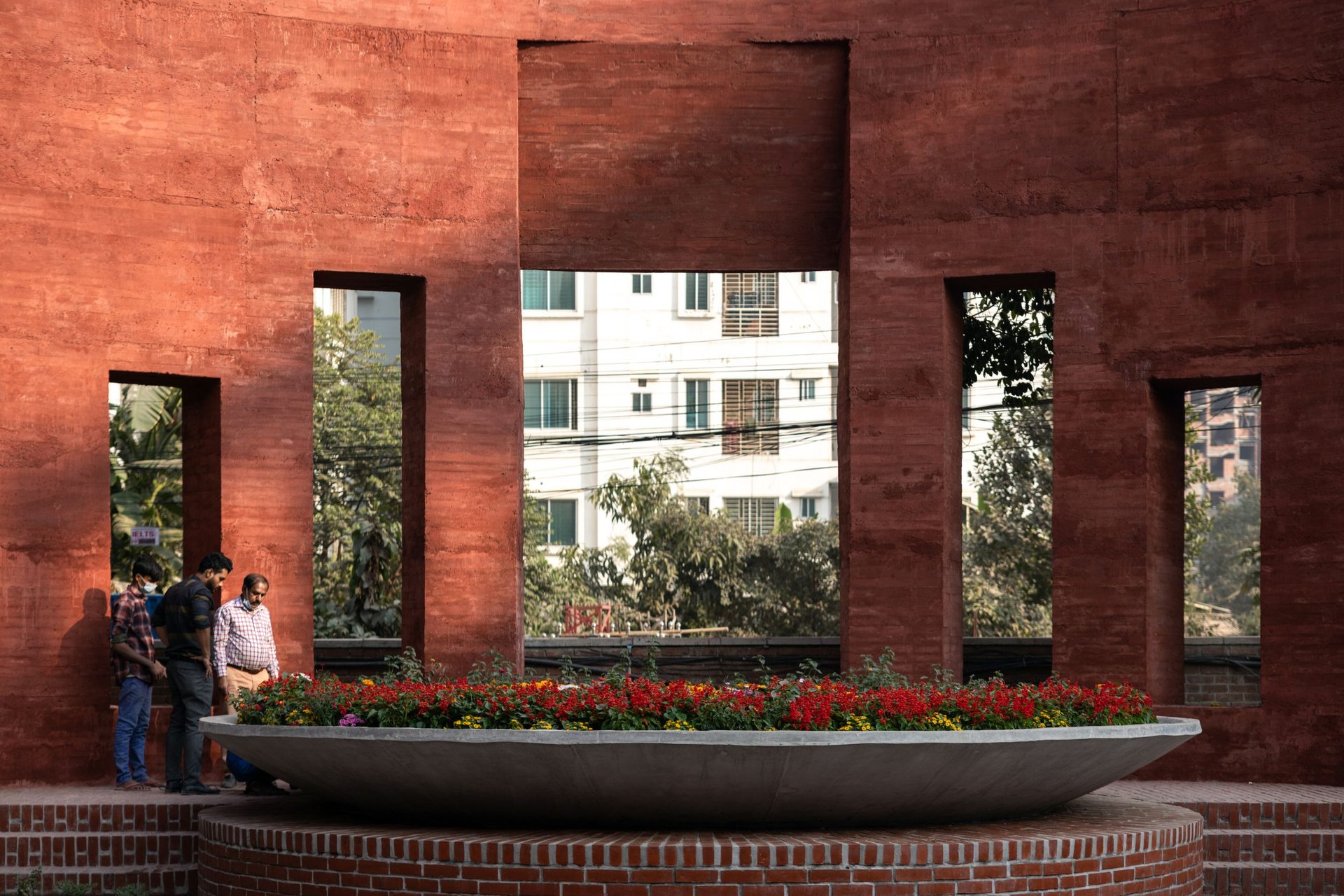
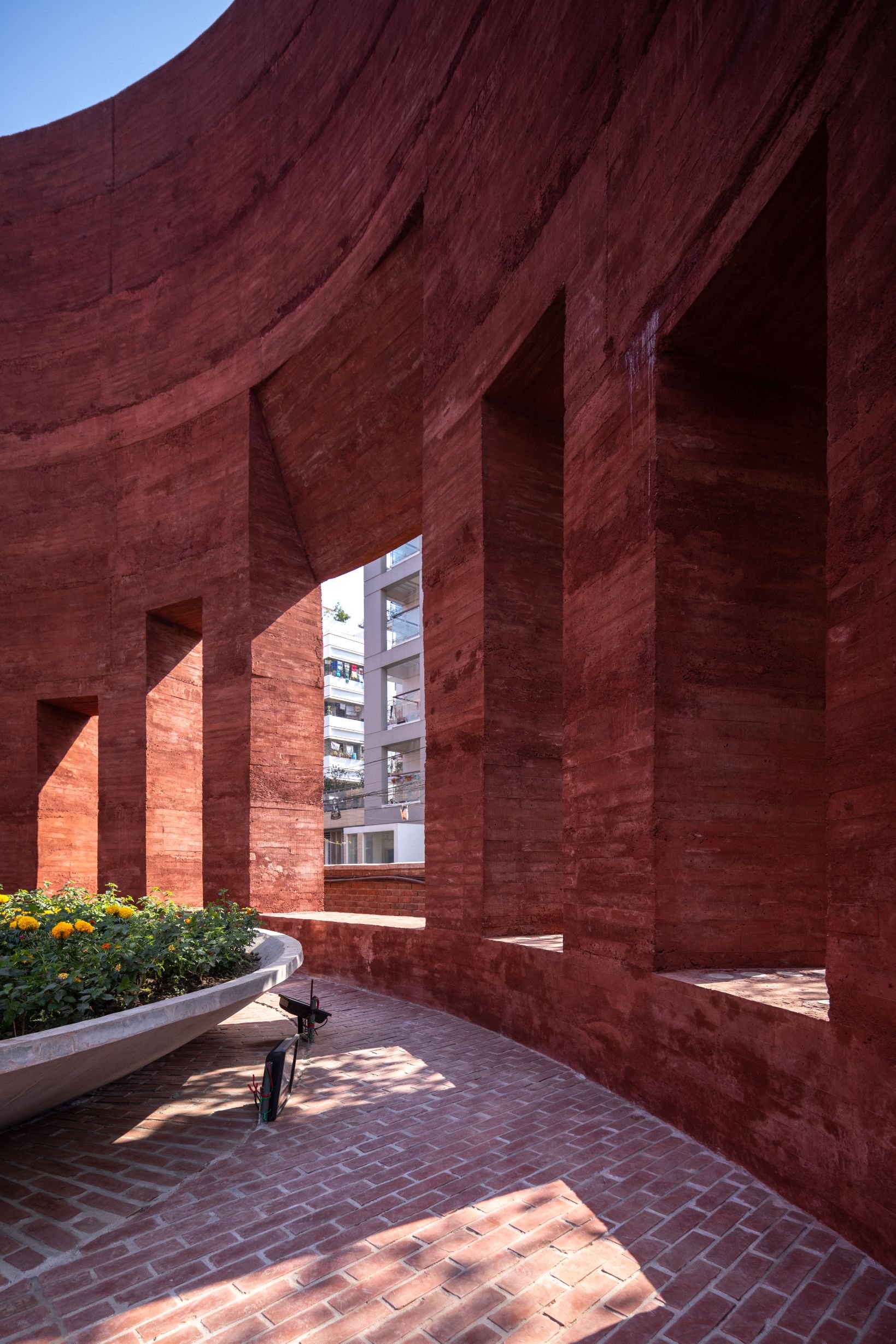
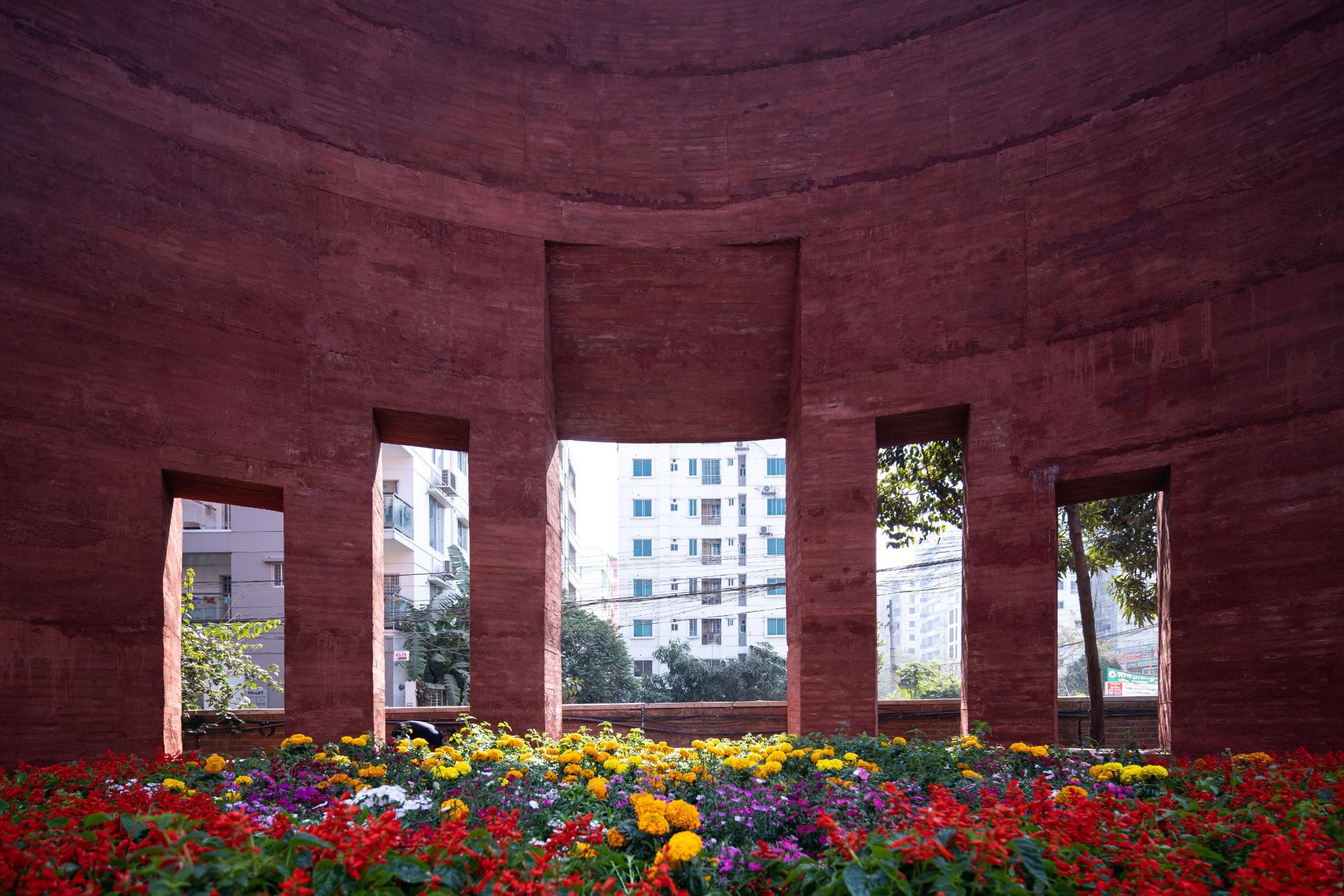
The geometry is kept simple, with the curve allowing the wall to be experienced differently as one approaches, enters and moves around it. Openings are cut into the otherwise solid mass to bring in controlled views, daylight and shadow, making the interior feel connected to the city without losing its sense of enclosure.
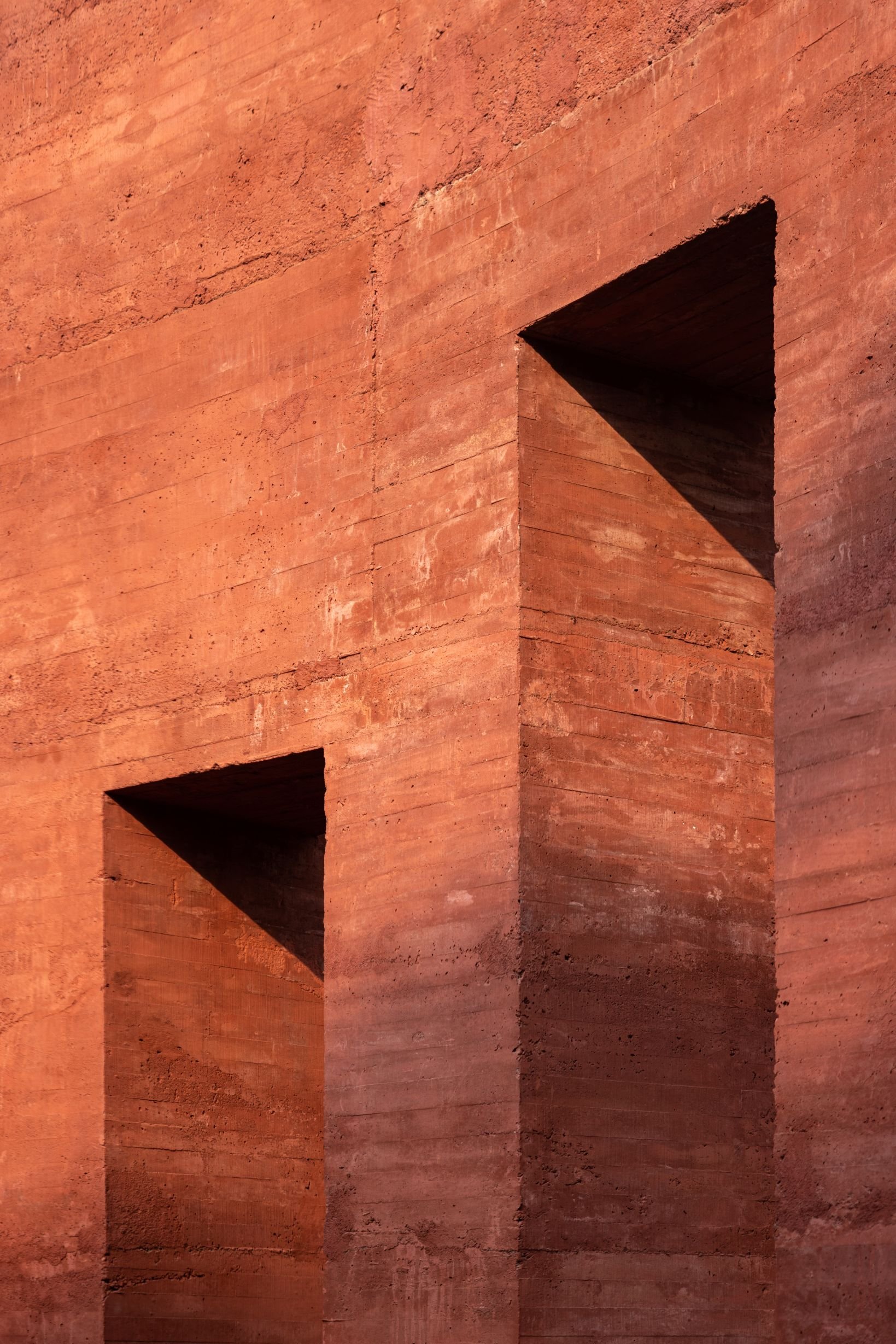
The vertical element rises from this curved wall and gives the monument its presence from the street, while also establishing a stronger sense of direction and height. The red-pigmented concrete was chosen for its refined yet warm-earthy attributes and its connection to the material character of the region. Its texture, joints and changing light, becomes part of the expression. The design was developed through the relationship between wall, opening, movement and structure, keeping the form restrained so that the experience of entering the space, sitting within it and encountering the light becomes more important than the object itself.