Where the City Meets the Sea
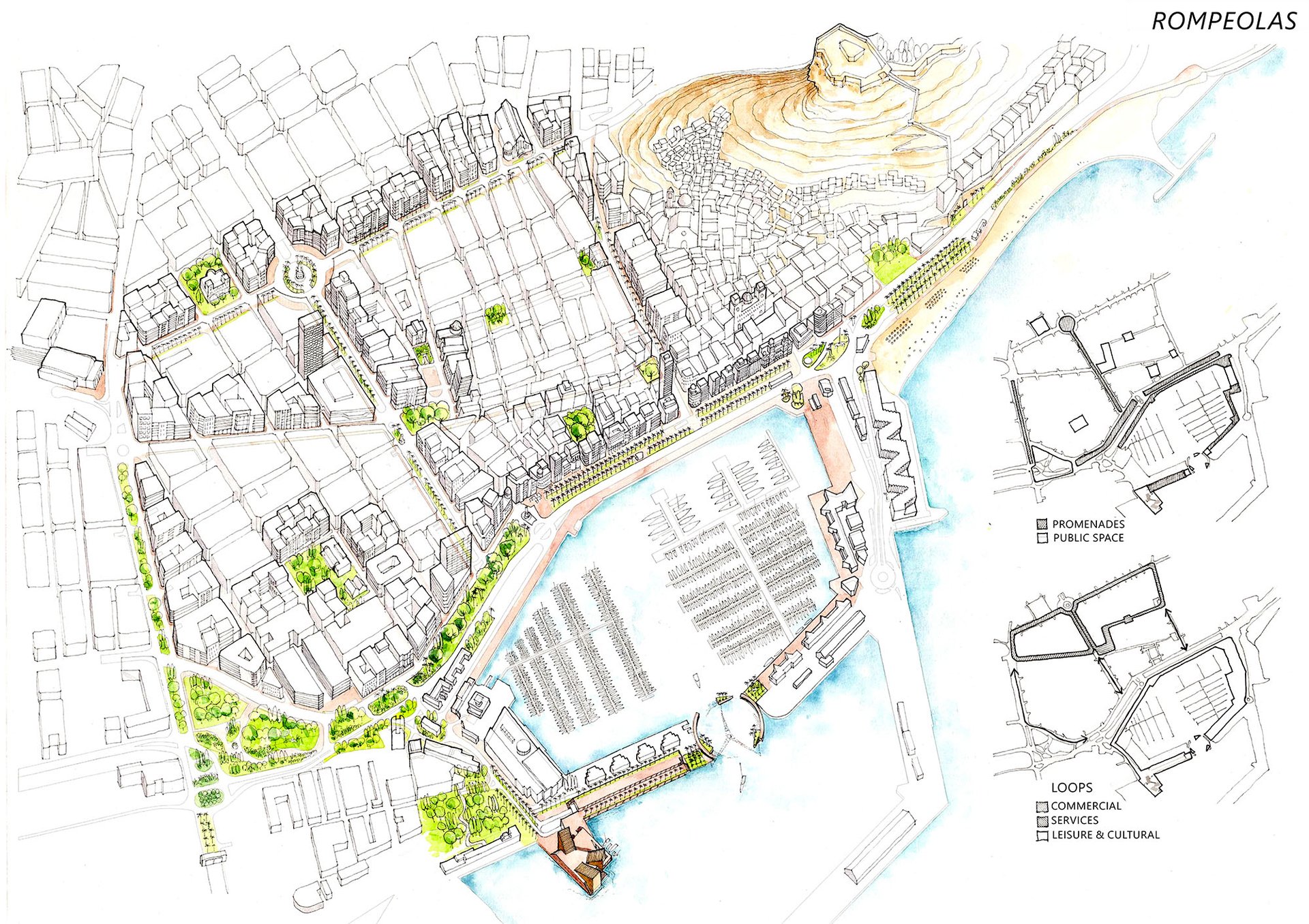
The Civic Centre at Alicante is conceived as a civic and cultural landmark that extends the life of the city toward the waterfront. Rather than functioning as an isolated institutional building, the project establishes a continuous public realm in which architecture, landscape, water and urban movement come together. The proposal transforms the waterfront into a sequence of public spaces, promenades and cultural destinations, creating a strong connection between the existing city and the Mediterranean edge.
The masterplan is organized around the idea of urban loops and public connections. Existing streets are extended toward the waterfront, while landscaped promenades and pedestrian routes create multiple approaches to the civic centre. The project therefore works not only as a destination but also as a connector within the larger urban fabric.
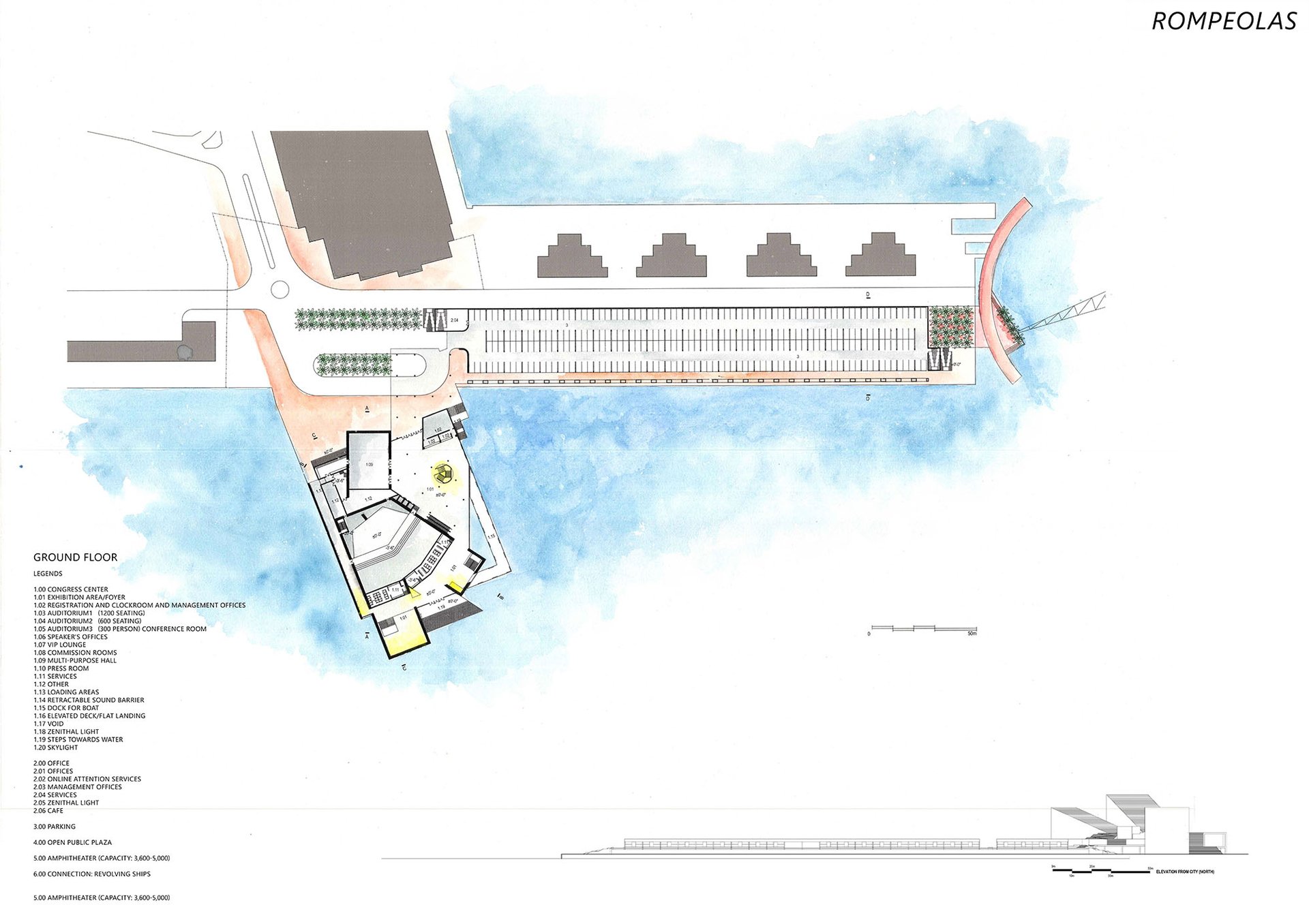
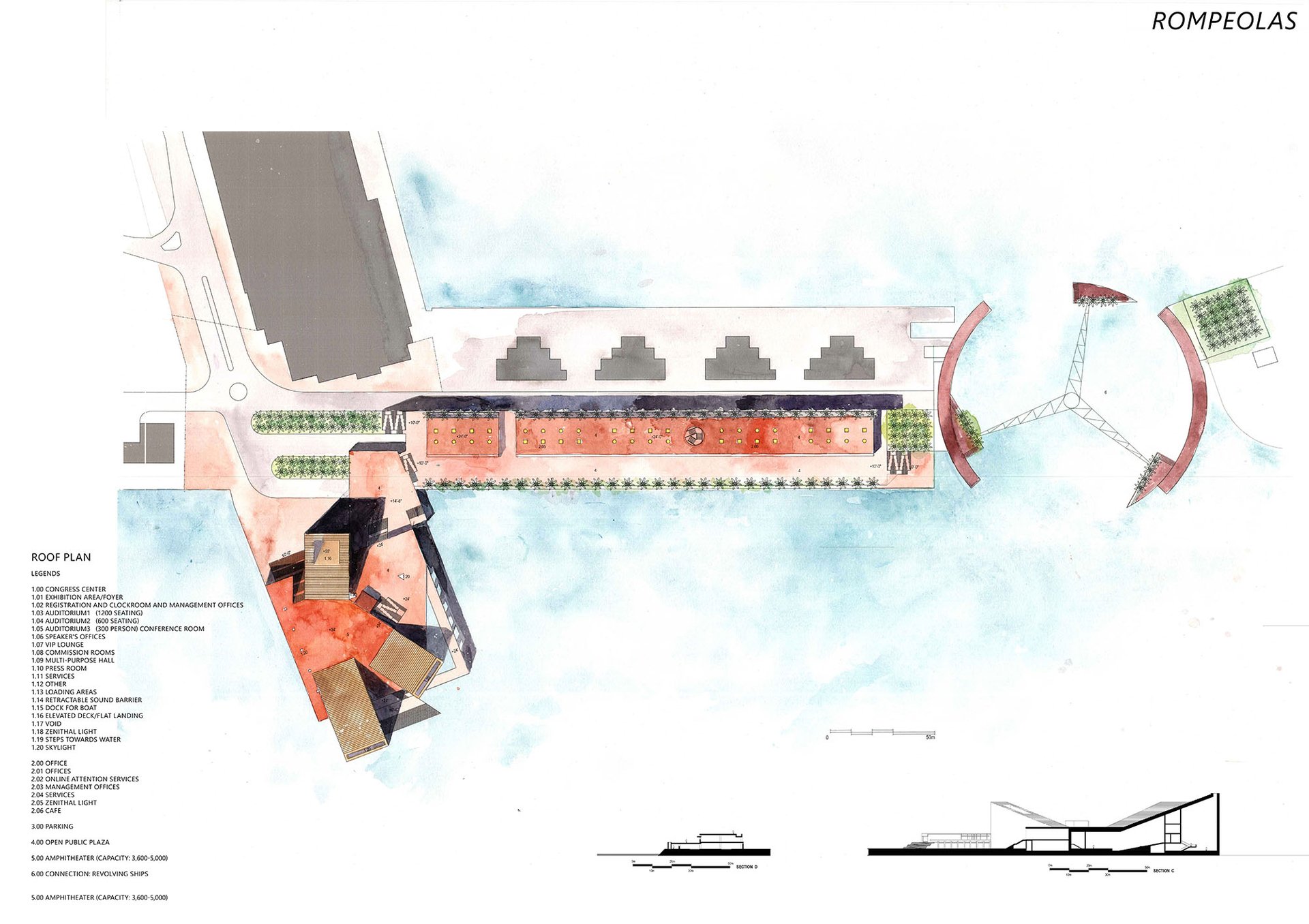
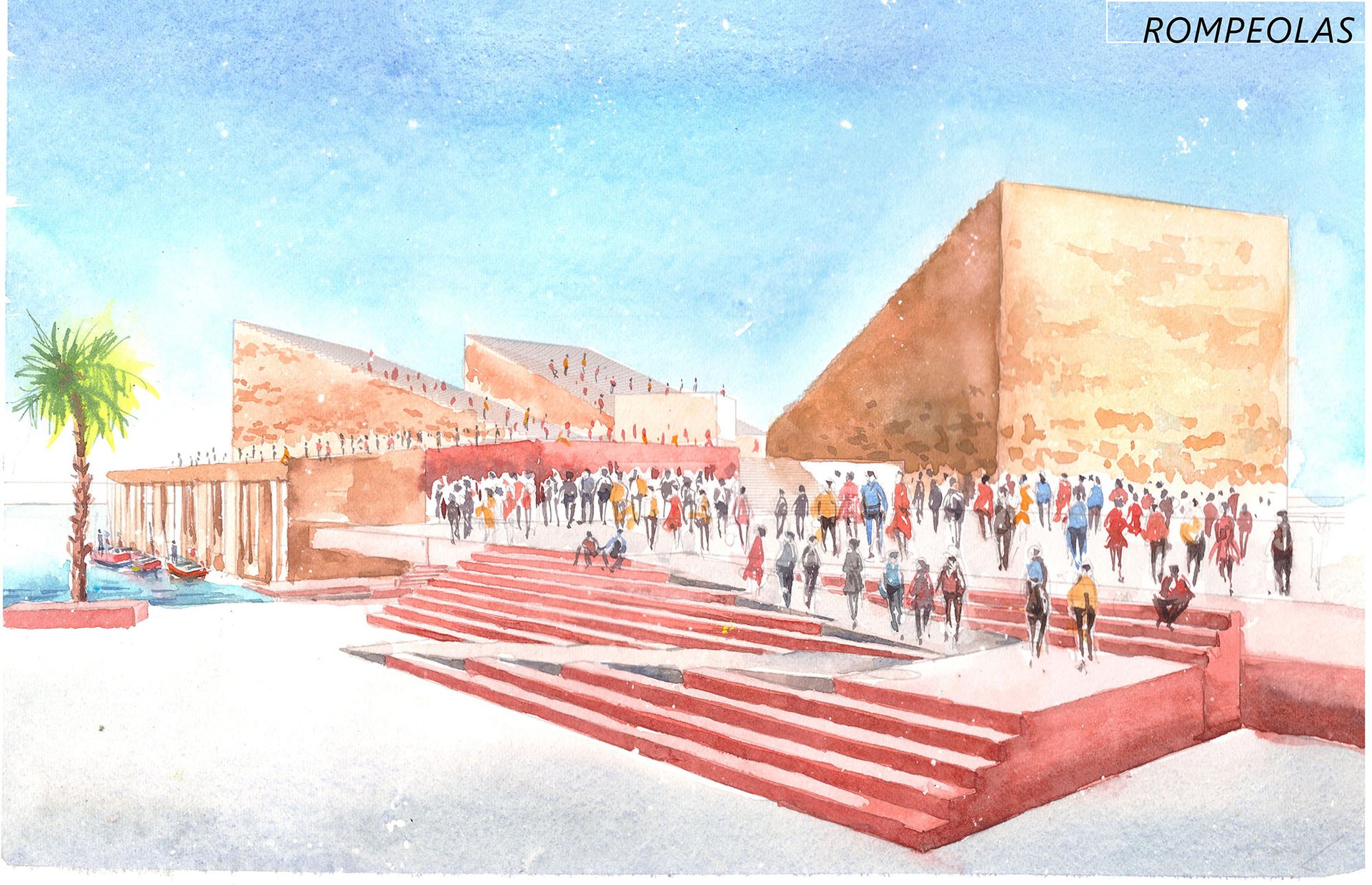
At the heart of the intervention is a large open public plaza, conceived as an extension of the city. The plaza gradually steps toward the water, creating informal seating, gathering spaces and places for public events. These terraces allow people to occupy the waterfront at different levels while maintaining visual connections with the sea and the surrounding landscape.
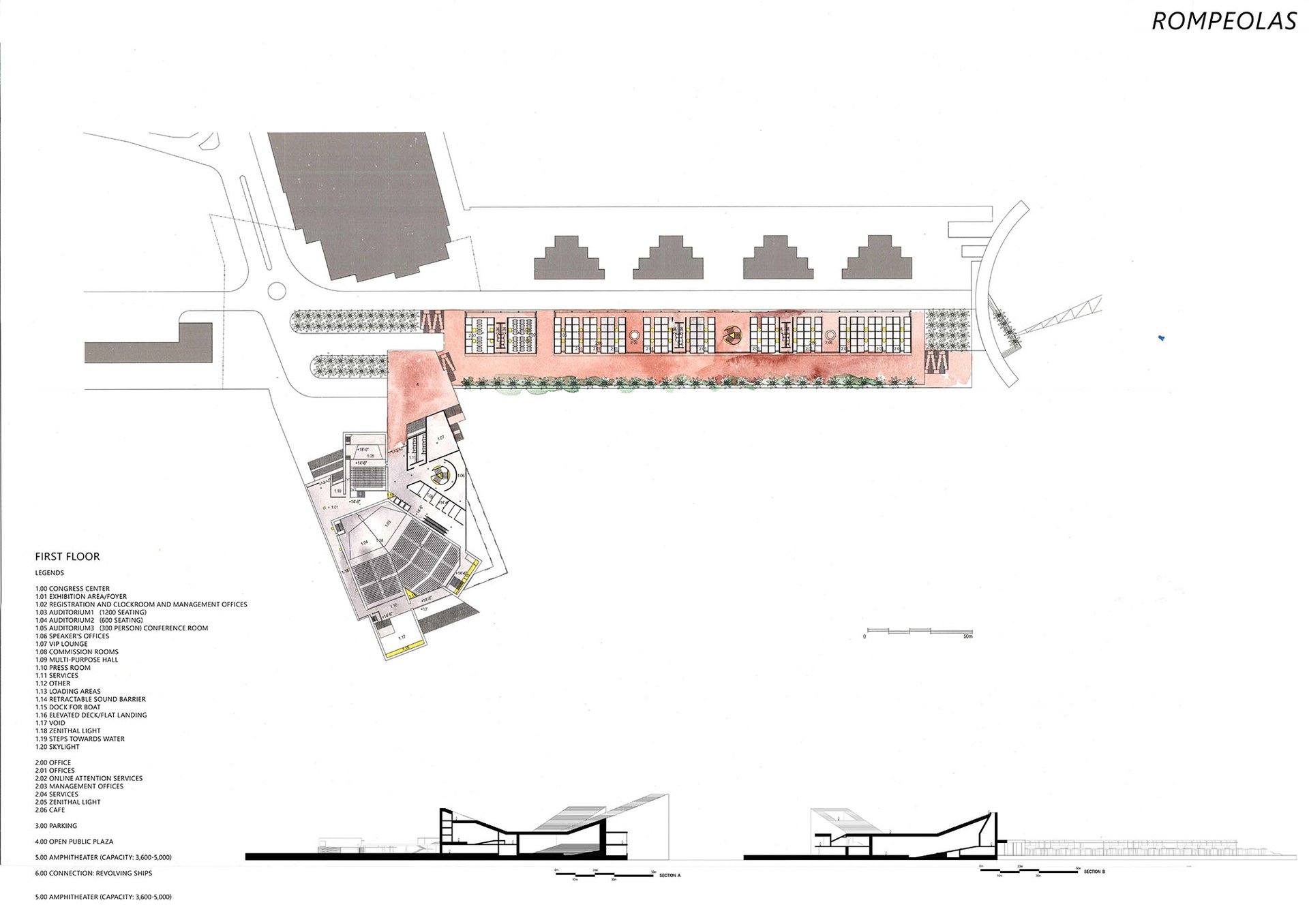
The architectural programme is distributed between congress and conference facilities, auditoriums, exhibition spaces, offices, meeting rooms, cafés and public amenities. Instead of concentrating all functions within a single monumental volume, the building is articulated into interconnected forms that respond to the waterfront and the existing urban context.
One of the most important elements is the amphitheatre, which becomes a civic stage overlooking the water. Its stepped landscape provides both formal seating and informal public space, allowing the architecture to accommodate large gatherings while remaining accessible as an everyday urban landscape.
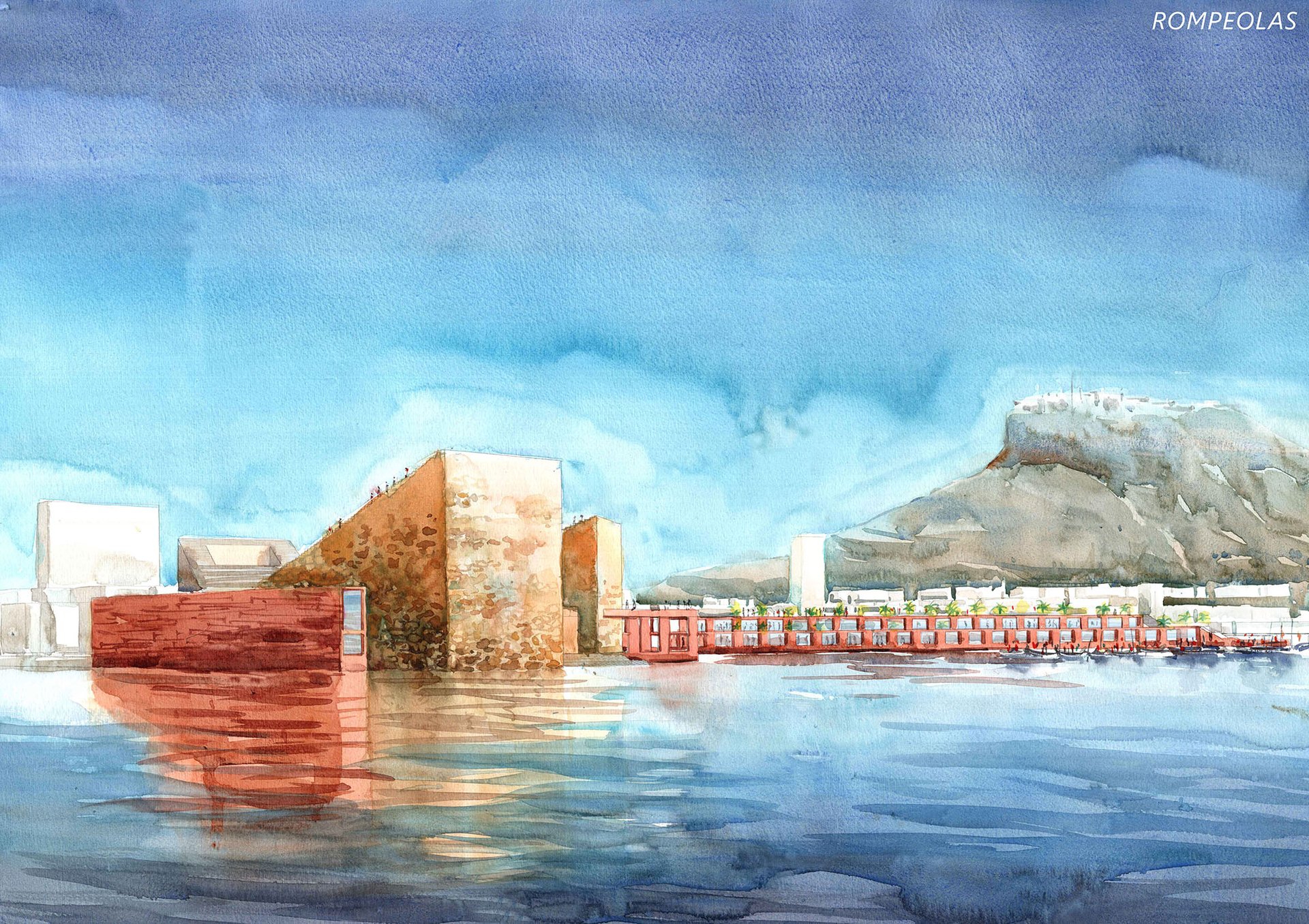
The project also introduces a strong relationship between land and water. The waterfront is not treated as a boundary but as an active public edge. Boat connections, promenades and open terraces reinforce the relationship between the civic centre and the harbour. Water becomes part of the architectural experience, reflecting the buildings and extending the visual field beyond the physical limits of the site.
The architectural language is deliberately monumental yet fragmented. Large solid volumes create a sense of permanence, while terraces, cuts, ramps and open spaces carve the building into a more porous civic landscape. The warm, earthy tones of the architecture contrast with the blue of the Mediterranean, establishing a visual dialogue between earth, architecture and water.
The project can therefore be understood as a piece of city rather than simply a building. Its significance lies in the way it creates spaces for people to gather, move, celebrate, perform and interact. The civic centre becomes a threshold between the urban fabric and the sea—a place where the everyday life of Alicante gradually dissolves into the openness of the waterfront.